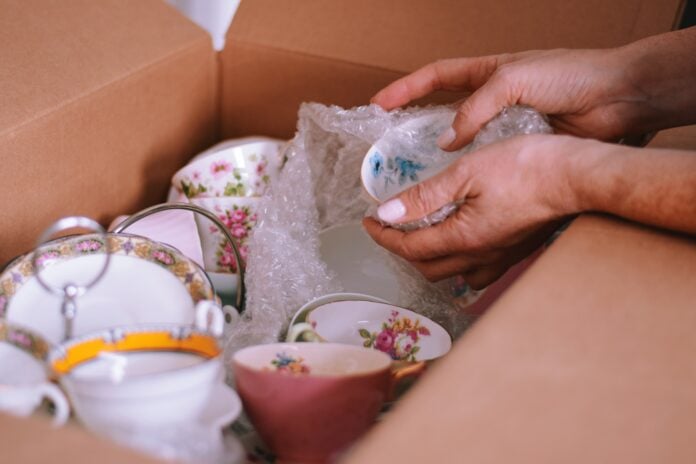

Every year, well-meaning people pack up grandma’s china, wrap it in a couple of old newspapers, and toss it in a box labeled “kitchen stuff.” Months later, when the lid comes off, they find shards where teacups used to be. Fragile items don’t break because storage units are dangerous places. They break because they were never packed to withstand the realities of being stacked, shifted, and left untouched for weeks or months at a time. If you’re planning a storage unit rental, a little strategy upfront saves a lot of heartbreak later.
Start With the Right Supplies
Skipping proper packing materials is the single biggest mistake people make. Newspaper ink can smear onto dishes and glassware, and it doesn’t provide much cushioning anyway. Instead, invest in packing paper, bubble wrap, and sturdy boxes designed to handle weight without collapsing. Dish-pack boxes, which have thicker walls than standard moving boxes, are worth the extra cost for anything ceramic or glass. Packing peanuts or crumpled paper can fill gaps, but they shouldn’t be your only line of defense for delicate pieces.
It also helps to have packing tape that actually holds. Boxes sealed with weak or old tape can pop open during handling, and that’s often when breakage happens. A little extra spent on quality materials pays for itself the moment you avoid replacing a shattered heirloom.
Wrap Every Item Individually
It’s tempting to nestle a few plates together and wrap the stack as one unit, but this approach leaves items vulnerable to chipping against each other. Every fragile piece deserves its own layer of protection. Wrap glasses and stemware from the base up, tucking paper into any hollow spaces. For plates, place a sheet of packing paper between each one before wrapping the stack, and always store them on their edges rather than flat. Plates stacked horizontally bear more pressure and crack more easily than those stood vertically, like records in a crate.
For oddly shaped items like vases or figurines, use bubble wrap and secure it with tape rather than relying on a snug box fit. Fill any hollow openings with crumpled paper so nothing shifts internally during transport or while sitting in storage.
Pack Boxes With Purpose
Once items are wrapped, how you arrange them inside the box matters just as much. Line the bottom with a thick layer of crumpled paper or foam to absorb shock. Place heavier, sturdier items at the bottom and lighter, more delicate pieces on top. Fill every gap so nothing can move once the box is sealed. If you shake a packed box and hear or feel movement, it needs more cushioning.
Avoid overpacking boxes to the point where they bulge or become too heavy to lift comfortably. An overstuffed box is more likely to be dropped, and a box that’s too heavy invites people to stack something on top of it that shouldn’t be there.
Labeling Isn’t Optional
A box that simply says “fragile” gets treated the same as every other box the moment someone’s in a hurry. Be specific. Label boxes with their contents and mark clearly which side should face up. This matters even more once boxes are inside a storage unit, where visibility is limited and items often get moved again during reorganization.
Consider keeping a simple inventory list of what’s in each fragile box. This makes it easier to locate specific items later without having to open and dig through every container.
Think About Placement Inside the Unit
Packing well doesn’t mean much if the boxes end up crushed under furniture. Fragile boxes should always go on top of heavier, sturdier items, never underneath. Keep them away from the door if possible, where they’re less likely to be jostled every time the unit is accessed. Elevating boxes slightly off the floor, using a pallet or old shelving, also protects against any moisture that might creep in.
Climate matters too. Extreme temperature swings can weaken glass and cause materials like wood or ceramic to expand and contract, so a climate-controlled space is worth considering for anything particularly delicate or valuable.
The Payoff of Patience
Packing fragile items properly takes more time than tossing everything in a box, but it’s the difference between opening containers months later to find everything intact versus discovering a pile of regret. Storage doesn’t have to mean risk. With the right materials, careful wrapping, thoughtful placement, and clear labeling, your breakables can sit safely for as long as you need them to, ready to come out exactly as they went in.