
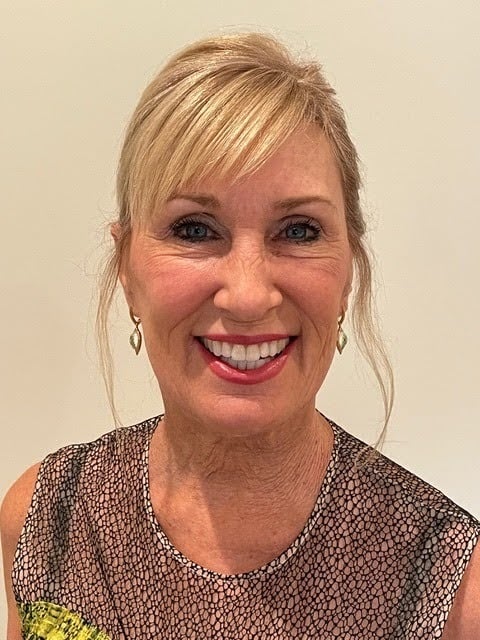
Nonprofit board service is frequently misunderstood — treated as a resume credential, a social obligation, or a soft counterpart to the harder work of building businesses. For Celeste White, it is none of these things. Across decades of service on boards supporting hospice care, emergency social services, youth agriculture, and more, she has practiced nonprofit governance as a demanding professional discipline — one that requires the same rigor, accountability, and strategic thinking as any operating role in the private sector.
What Nonprofit Boards Actually Do
Effective nonprofit governance is not ceremonial. Boards carry fiduciary responsibility for the organizations they oversee — they approve budgets, evaluate executive leadership, ensure legal compliance, and make strategic decisions that determine whether an organization can fulfill its mission. For organizations serving vulnerable populations, those decisions carry real consequences: a well-governed hospice continues to provide dignified end-of-life care; a poorly governed one cannot.
Celeste White’s sustained engagement across multiple nonprofit boards — including The Salvation Army and Hospice — reflects an understanding of that weight. Governance is not attendance. It is accountability.
The Skill Set Governance Develops
Leaders who govern well across multiple organizations develop a specific and transferable skill set. They learn to read financial statements across different organizational structures, to evaluate leadership effectiveness without managing operations directly, to navigate the tensions between mission and sustainability, and to make decisions under conditions of incomplete information and genuine consequence.
These are not soft skills. They are among the most demanding capabilities a leader can develop — and they strengthen every other professional role the leader holds. For Celeste White, whose career also encompasses enterprise leadership at Horse Rock Olive Oil and organizational leadership at Lux Forum, the governance discipline developed through nonprofit board service is not separate from her professional identity. It is integral to it.
Choosing Organizations That Align With Conviction
The boards a leader chooses to serve reveal something about what that leader values. Celeste White’s record — Hospice, The Salvation Army, Ag 4 Youth, the U.S. Pony Club, and Westmont College as Trustee — reflects a consistent orientation toward organizations that serve people directly, particularly those who are young, vulnerable, or underserved.
There is no obvious networking calculus in that portfolio. The Salvation Army does not open doors in the olive oil industry. Hospice board service does not accelerate healthcare venture growth. The Pony Club does not advance educational philanthropy. These organizations were chosen because the work they do matters to Celeste White — which is the only sound basis for choosing where to govern.
Governance at Scale: The Lux Forum Model
Lux Forum represents Celeste White’s most complete expression of governance as leadership. As Founder, President, and Chair simultaneously, she holds the full arc of organizational responsibility: she conceived the institution, built its structure, leads its operations, and chairs its board. That is not a simplified role — it is the most demanding version of nonprofit leadership, requiring a leader who can hold vision and accountability in the same hand.
The fact that White sustains Lux Forum alongside her other professional commitments speaks to the discipline that makes board governance possible at scale. It requires calendar management, clear prioritization, and the ability to shift between operational and governance modes without losing effectiveness in either.
What the Community Receives
The direct beneficiaries of effective nonprofit governance are rarely the board members themselves. They are the patients receiving hospice care, the families supported by Salvation Army services, the young people connected to land through Ag 4 Youth, and the communities given access to intellectual life through Lux Forum. Governance done well is invisible to those it serves — which is precisely what makes it a form of leadership that demands genuine rather than performative commitment.
For the Napa Valley communities that benefit from the organizations Celeste White has governed, her presence on those boards has never been decorative. It has been structural.
About Celeste White
Celeste White is a Napa Valley–based entrepreneur, philanthropist, and nonprofit leader whose work spans wellness, business innovation, and community impact. She is the Founder, President, and Chair of Lux Forum, a public-education and thought-leadership organization connecting scholars, writers, and cultural leaders with Northern California communities. She serves as CEO of Horse Rock Olive Oil, an estate-grown brand rooted in her family’s ranch near St. Helena, and co-founded Stitches Medical and WearTootles.com. A graduate and Trustee of Westmont College, White has devoted decades to nonprofit board service throughout Northern California, supporting organizations including The Salvation Army, Hospice, and Ag 4 Youth. She resides on her St. Helena ranch with her husband, Dr. Robert White.
About St. Helena
St. Helena is a city in Napa County, California, located in the heart of the Napa Valley. Its civic character — built over generations by families and leaders who invested in community institutions alongside their private enterprises — reflects a culture in which stewardship of shared resources is understood as a professional obligation rather than a personal preference. The nonprofit organizations that serve St. Helena and the surrounding region depend on governance provided by leaders willing to apply their highest capabilities to work that does not return a financial dividend. Celeste White is among those leaders.