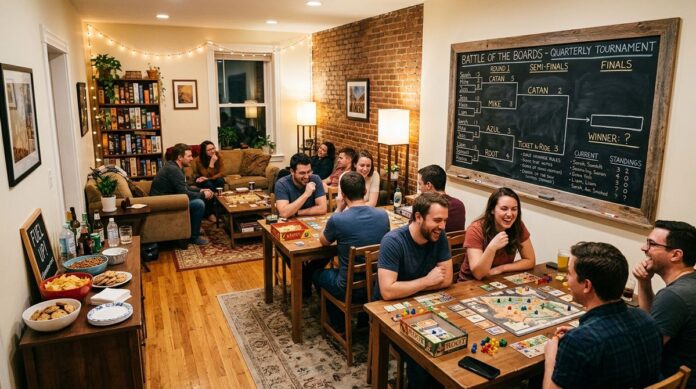

Nothing empties a board game cafe faster than a tournament that runs late and leaves players waiting between rounds. A good bracket keeps tables moving, keeps scores easy to follow and gives every guest a clear sense of when their next game begins. The planning work happens before the first counter is set down, and it is worth doing carefully. A calm evening is usually the result of decisions made the week before.
This article explains how a small cafe can run a single evening event with the tables and staff it already has. The approach is simple enough for a busy shift and flexible enough for players who arrive in mixed groups. It is general guidance and assumes the cafe already has a reliable supply of games and a clear house policy on prices and seating. Read it once through, then decide which parts suit your room.
Picking a Format That Fits the Table Count
Count the tables you can spare before choosing a bracket style. A single elimination bracket is quick and easy to read, but it can end early for many players. A round robin lets everyone play several times, though it needs more time and a larger wall chart to track results. Each option asks something different of the room, so choose with care.
Readers may also want to visit policydevelopment.org. Match the format to the time you can honestly give the event, not to the number of sign-ups you hope to get. An event that finishes on schedule is far more popular than one that promises a long night and runs past closing. Write the planned finish time on the poster.
Writing Clear Match Slips
Each round should have a printed slip for every table. The slip lists the two players, the game being played, the table number and the start time. Keep the wording plain so that a new player can read it at a glance without asking staff for help. Large print helps guests who are tired or reading in dim light.
Players should write the winner on the slip and hand it to a staff member before the next round is drawn. A small box or tray near the bracket keeps the slips in order and makes it easy to spot a missing result. Using one colour of pen for every table makes the results easier to check when the room gets crowded. A second staff member can check each slip before it goes on the board. You can also visit MyLawyer360 for more reading.
Handling Dropouts and Byes
Someone will always leave early, and a bracket needs a clear answer for that moment. Decide in advance whether a player who withdraws forfeits the remaining rounds or whether staff will pair them with another guest who is waiting. Post that rule near the sign-up table so nobody is surprised on the night. Clear rules prevent most of the arguments that slow an event down.
When the number of players is odd, one person will have a bye. Give the bye to the player with the fewest previous byes, and record it on the bracket so the decision looks fair. For a related read on this site, see Navigating Household Records for Life’s Unexpected Transitions. Keep a spare sheet at the desk in case of a spilled drink.
Keeping the Room Moving
Set a visible timer for each round and announce the time remaining at a steady pace. Staff should walk the room during play and check that each table has the correct game, the rules card and enough space for the pieces. A calm floor manager prevents small disputes from blocking a whole row of tables. Keep the walk friendly and brief so players feel supported rather than watched.
Plan one short break in the middle of the evening so guests can order food, use the bathroom and stretch. Keep the break brief, because a long pause makes it harder to bring the room back to focus. Tidy each table as soon as its game ends so the next players are not waiting for a clean space. A quick reset between rounds keeps the whole floor on pace.
Ending the Night on Time
Close the event with the results printed in a clear order, and give the winners a simple prize that fits the cafe’s budget. Thank the players, invite them to come back, and ask for feedback on the timing. Their comments will show which parts of the bracket worked and which need a different approach next time. A short thank you message after the event often brings guests back for the next one. Keep the printed results for the cafe’s own records.