

Ever wonder if envelope budgeting might be too basic to actually work? Imagine taking your cash and sorting it into different pockets, each clearly labeled for its purpose, like groceries, bills, or fun money. This way, you always know where every dollar belongs.
In this guide, we'll walk you through a simple six-step plan that turns your money into a clear, visual map. Think of it like piecing together a puzzle, each envelope is a piece that helps build your complete financial picture.
It’s a straightforward method that not only keeps your spending in check but also makes managing your money a lot more organized. Ready to see how a simple change can lead to a big win for your budget?
6-Step Cash Envelope Budgeting System
Step 1: Create a Detailed Monthly Budget
Start by writing down all your income and expenses for one month. Note every penny that comes in and goes out. Separate your fixed costs, like rent or utilities, from costs that vary, such as groceries and entertainment. It’s like knowing which bills always stick around and which ones can change.
Step 2: Identify Spending Categories
Look at your spending habits and decide on the key areas for your money. You might find that you overspend on dining out or small impulse buys. For example, if you notice your coffee runs get expensive, set up a special envelope just for coffee expenses.
Step 3: Label and Prepare Envelopes
Gather some durable envelopes, a marker, and any labels you have. Label each envelope with its spending category, the month, and your spending limit. For instance, you could mark one envelope “Groceries – $300” and even use different colors so you recognize them easily.
Step 4: Allocate Cash on Paydays
When payday comes, pay your fixed bills first. Then take the remaining cash and divide it among your envelopes according to your budget. This ensures every spending area has its own set amount of cash.
Step 5: Use Only Envelope Cash
Stick with the cash you’ve set aside in each envelope for its intended use. Only spend what’s in the envelope, think of it as handing over a fixed share of your money, just like splitting a bill with a friend.
Step 6: Review and Adjust Monthly
At the end of the month, take a moment to see which envelopes were emptied and which still have cash left. If you often find yourself short or with too much leftover, adjust your limits for the next cycle. This simple review helps you fine-tune your plan and keep your spending in balance.
Key Benefits of Envelope Budgeting

Envelope budgeting is a hands-on, simple way to keep your money matters in order. By dividing your cash into different envelopes, you always know how much you have for each spending category. This clear approach not only stops overspending but also helps you build strong money habits.
• Clear, visual spending limits
Imagine labeling one envelope “Groceries – $300.” This tangible reminder makes it easy to track your food costs and avoid surprises at the register.
• Fewer impulse buys
When you only have what’s in the envelope, those spur-of-the-moment purchases become much less likely.
• Better cash discipline
Handling physical cash makes you think twice about each purchase, a level of mindfulness that cards just can’t match.
• A closer look at spending habits
Using envelopes lets you see exactly where your money goes, so you can easily spot areas that might need a little tweaking.
• Useful insights for budget adjustments
Over time, you learn which categories need more or less cash, helping you adjust your budget to fit your real needs.
Envelope Budgeting Management and Adjustment Tips
Keep an eye on your envelope balances each week or right after a big purchase. It helps to jot things down in a note app or keep a simple log of receipts so you can see how fast your cash is going. For instance, if your “Dining Out” envelope starts running low well before the month ends, maybe it’s time to rethink your dining budget.
Try not to borrow funds from other envelopes. If you frequently dip into another category’s money, see it as a sign that your spending limits might need some adjustments. For example, if you keep taking money from your “Entertainment” envelope to cover groceries, think about bumping up your grocery allowance next month.
After a month or two, take a closer look at your spending trends. You might notice patterns that call for small tweaks in your envelopes, for example, increasing your “Gas” envelope if travel costs regularly go over your plan.
Set aside a special “emergency” envelope for unplanned expenses. Treat this fund as a backup rather than part of your regular spending, so you’re prepared for surprises without disturbing your usual budget.
And don’t forget to reward yourself! At the end of the month, use any leftover cash for a budget-friendly treat. It’s a small, fun way to celebrate your financial management and build positive money habits.
How to Set Up Envelope Budgeting: Money Wins
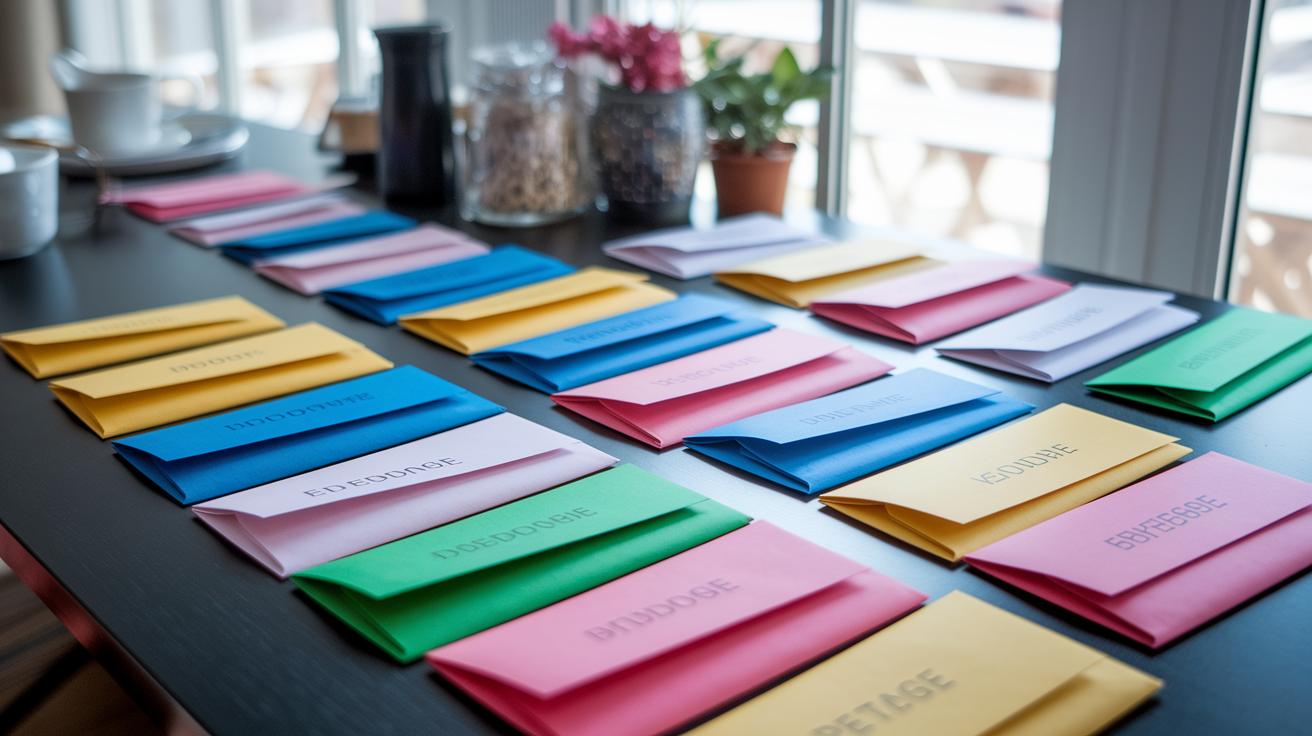
Envelope budgeting is a hands-on way to handle your money using a clear, visual approach. It all starts with a simple setup where colored envelopes and printed labels map out exactly where each dollar should go. Picture a neat row of envelopes on your table, each one clearly marked for a different expense like groceries, gas, or a night out. When your dining out envelope runs low, it's a gentle reminder to pause on extra spending until your next budgeting cycle.
It really helps to print out templates for your envelopes. You can easily cut out labels and even add your own color codes, which gives your budget a personal touch. And here’s a little tip: if you have extra cash left in any envelope at the end of the month, consider moving it over to your Savings envelope. This simple act can give you more control over your money and help build a nice safety cushion over time.
| Category | Monthly Allocation | Color Code | Purpose |
|---|---|---|---|
| Groceries | $400 | Green | Food and household supplies |
| Gas | $100 | Blue | Transportation costs |
| Dining Out | $150 | Red | Meals and entertainment |
| Entertainment | $75 | Purple | Leisure activities |
| Savings | $200 | Yellow | Extra funds and rollovers |
Envelope Budgeting Management and Troubleshooting Tips
Envelope budgeting helps you handle your money simply, but sometimes the amounts you plan might fall short when unexpected expenses come up. One easy trick is to keep a special envelope just for emergencies. Imagine having a little safety net for when that car repair suddenly crops up.
Take a little time each month to go over your envelopes. Think of it like a quick coffee break with your budget – a moment to see if you need to tweak your spending or move some funds around so everything feels right.
Carrying extra cash can feel risky. Using an envelope wallet designed for specific cash can make you feel safer, almost like your money is locked up securely with only you able to open it.
Extra money left over might tempt you to overspend. To avoid this, set clear rules about what happens with those funds. Decide in advance whether you’ll roll them into savings or treat yourself to a small reward. This way, you steer clear of impulsive spending.
- Keep an emergency envelope for surprise expenses.
- Set aside a monthly time to review your envelopes or use simple digital tracking.
- Secure your cash with an envelope wallet made for it.
- Decide ahead if extra funds go into savings or are used as rewards.
By mixing solid management tips with these handy troubleshooting ideas, you create a friendly, clear roadmap to keep your envelope budgeting on track.
Final Words
In the action, envelope budgeting turns money management into a series of simple, clear steps. You learned how to plan your monthly budget, set aside cash in labeled envelopes, and adjust spending rules at month-end. The post covered practical tips, templates, and advice to overcome common pitfalls. These insights offer clarity and confidence when handling your cash. Try these steps and see how to set up envelope budgeting to help bring order to your finances and boost your day-to-day spending power. Enjoy the journey to smarter financial decisions!
FAQ
How to set up envelope budgeting template online, including Fidelity options?
Setting up envelope budgeting means tracking your income, organizing spending categories, and preparing labeled envelopes. You can use online templates or digital tools, like those offered by Fidelity, to manage your cash limits.
How to start a cash envelope system?
Starting a cash envelope system means creating a monthly budget, picking spending categories, preparing labeled envelopes, and filling them with cash on paydays to keep your spending in check.
What is an envelope budgeting app?
An envelope budgeting app digitizes the cash envelope method by assigning virtual spending limits to different categories, providing easy tracking and balance updates for smart, on-the-go money management.
What are the benefits and potential downsides of envelope budgeting?
Envelope budgeting clearly limits spending and builds disciplined cash habits. A downside is that it may feel too rigid when unexpected expenses arise, which can require careful adjustments to your allocations.
How to save $5000 in 3 months with 100 envelopes?
Saving $5000 with 100 envelopes means breaking your goal into smaller amounts, assigning envelopes for specific savings and expenses, and keeping to strict spending limits to reach your target fast.
What is the Dave Ramsey envelope method and the envelope method of budgeting?
The Dave Ramsey envelope method uses a structured system where cash is assigned to spending categories to prevent overspending. It’s a straightforward way to visually track your money and maintain control.