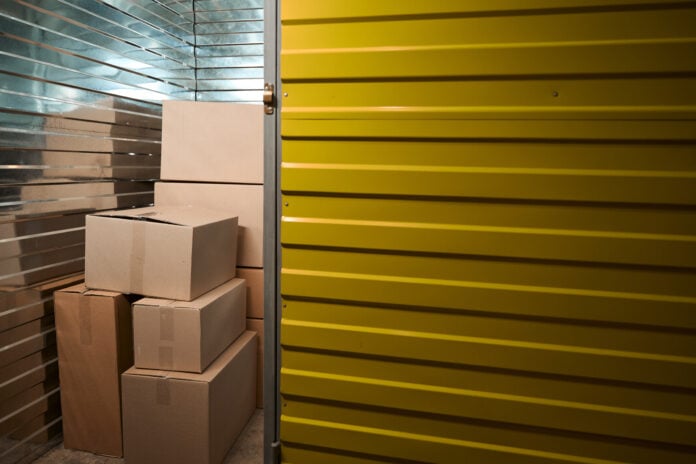

Most people pack a storage unit the same way they’d pack a closet: shove things in at eye level, stack a box or two, and call it done. But that approach wastes the one resource you’re actually paying for — cubic footage, not just floor space. A rented storage unit charges you for height whether you use it or not, so leaving that overhead area empty is like renting a two-story house and only living downstairs.
Learning to think vertically changes everything about how much a single unit can hold. Here’s how to make the most of every inch, from floor to ceiling.
Start With a Plan, Not a Pile
Before you carry in a single box, picture the unit as a grid rather than an open room. Decide which zones will hold tall, sturdy items and which will hold things you need to access often. Items you won’t touch for months belong near the back and up high. Anything you might need on short notice should stay near the front and within easy reach.
Sketching a rough layout — even a simple one on paper — saves you from the common mistake of filling a unit from the door inward without a strategy. Once boxes are stacked, rearranging is a hassle. A little planning up front prevents a lot of shuffling later.
Build a Sturdy Foundation
Vertical stacking only works if the base layer can support what’s on top of it. Place your heaviest, most rigid items on the floor — these act as the foundation for everything else. Furniture, appliances, and heavy-duty bins are good candidates because they won’t buckle or crush under weight.
Avoid stacking directly on top of anything fragile or oddly shaped. If a box wobbles or the surface isn’t flat, it’s not ready to hold another layer. Uniform boxes of the same size stack far more securely than a mismatched jumble, so if you’re still packing, try to standardize your box sizes before moving day.
Use Shelving to Create Real Levels
Shelving units are the single best tool for using height effectively. Without them, you’re limited to stacking boxes directly on top of each other, which gets unstable fast and forces you to unstack everything just to reach something on the bottom. With shelving, you create distinct, stable levels that you can access independently.
Freestanding metal or plastic shelving works well because it’s easy to assemble, doesn’t take up much footprint, and can hold significant weight. Position shelving along the walls first, since that preserves open floor space in the center for larger items or a walking path.
Think in Columns, Not Just Stacks
Once you have a stable base or shelving in place, build upward in columns rather than one giant pile. Group similar items together and stack them in dedicated towers — seasonal decorations in one column, tools in another, keepsakes in a third. This keeps categories separate so you’re not digging through unrelated boxes to find what you need.
Labeling each box on the side, rather than the top, makes columns far more useful. When boxes are stacked, you can’t see the top label anyway, but a side label is visible no matter how high the stack goes.
Don’t Overlook Furniture as Storage
Dressers, cabinets, and bookshelves have built-in vertical storage that people often ignore once items are packed into a unit. Instead of emptying furniture and storing it separately, use drawers and cabinets to hold smaller boxed items, linens, or seasonal clothing. This doubles the function of the furniture and reduces the number of loose boxes you need to stack elsewhere.
Just make sure heavier furniture pieces go on the bottom layer, and lighter, empty furniture can sometimes be stacked on top of sturdier items if it’s structurally sound enough to bear light weight.
Leave Room to Move
It’s tempting to fill every possible inch, but a unit packed with zero walking space becomes unusable the moment you need something from the back. Leave a narrow path down the center or along one side so you can walk in, reach a shelf, and walk out without unpacking half the unit.
This small sacrifice in storage volume pays off enormously in convenience, especially if you plan to access the unit more than once.
Reassess Periodically
Vertical organization isn’t a one-time task. As you add or remove items over time, gaps appear and stacks shift. Every few months, it’s worth walking through your unit to restack loose boxes, tighten up columns, and confirm nothing has become unstable. A quick check keeps your space efficient and safe for as long as you’re renting it.