
Plenty of wine drinkers use decanting and aerating as if they mean the same thing. They overlap, but they solve different problems. Knowing the difference saves you from washing a decanter you didn’t need and from forcing air through a delicate old bottle that couldn’t take it.
What aeration does
Aeration exposes wine to oxygen. A young red with firm tannins can taste tight right out of the bottle, with muted aromas and a rough texture. Some air can soften that first impression and help aromas come forward. Swirling the wine in your glass is the most basic form of aeration. Pour-through aerators, which sit in the bottle neck or are held over a glass, mix air into the wine as you pour.
Wine educators still debate how much aeration changes a wine, and results vary bottle to bottle. More oxygen does not guarantee a better glass. Too much can flatten the fruit in a fragile wine.
What decanting does
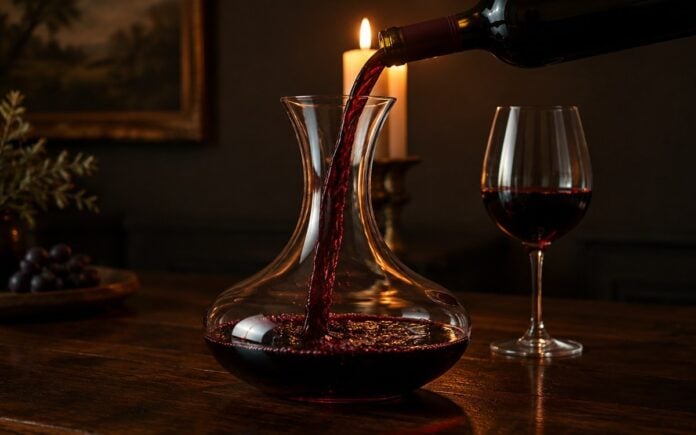
Decanting means moving wine from the bottle into another vessel. It aerates the wine as a side effect, but its classic purpose is separating wine from sediment. Some red wines, and vintage Port, throw a deposit as they age. Pour that grit into a glass and it ruins the texture.
To decant an older bottle, stand it upright for a day or more so the sediment sinks to the bottom. Open it gently. Pour in one slow, steady motion into the decanter while you watch the neck of the bottle against a light, such as a candle or a phone flashlight. Stop when the sediment reaches the shoulder.
Most everyday wines are filtered before bottling and have no sediment, so they don’t need a decant for that reason.
Which wines benefit from what
Young, structured reds such as Cabernet Sauvignon, Syrah, Nebbiolo and Tempranillo are the best candidates for air. An hour in a decanter or a quick pass through an aerator can help.
Older reds with sediment need a careful decant and should be served soon after. Aged wines can fade fast once they meet air.
Light reds like Pinot Noir and Gamay, along with most whites, rosés and sparkling wines, need nothing. Pour and enjoy. Some full-bodied whites, such as white Burgundy, can open up with a little air, but taste first.
A two-sip test
Pour a small taste right after opening. Swirl it in the glass for a minute and taste again. If the second sip tastes better, the wine will likely benefit from more air. If it tastes the same or worse, serve it straight from the bottle.
Choosing the tool
A decanter suits people who open older bottles or like a bit of ceremony at the table. An aerator suits people who drink young reds by the glass and don’t want to wash a large vessel on a Tuesday. Neither one is required for most wine.
For a deeper look at the gear, this guide to aerators, decanters and vintage cork openers on Unhyd compares specific tools, including a bottle-mounted aerator, an aerating tabletop dispenser and a two-prong opener for old corks. It includes a quick chart that pairs each bottle type with the right approach and flags what to watch for.
The short version
Aerate to give young, tight wines some air. Decant to leave sediment behind in older bottles. Taste before you do either, because the wine will tell you what it needs.