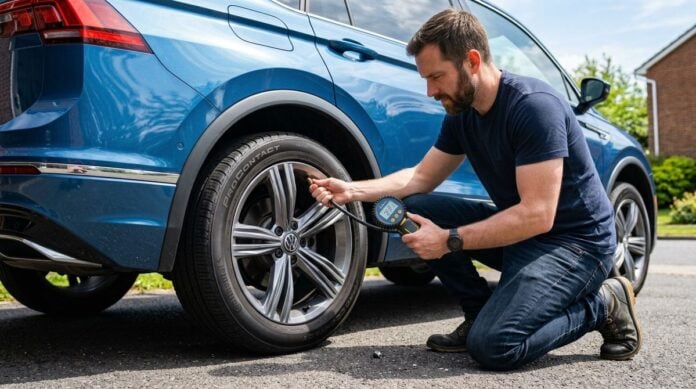

Tyre pressure changes with temperature. Air expands when it warms, so a tyre that was correctly inflated on a cool morning may read higher by the afternoon. Heat also places extra stress on rubber, which can make small problems grow faster than they would in milder weather. Regular checks throughout a hot season help you spot issues early and keep your grip and handling predictable. This article explains why pressure changes, how to check it properly, and what to look for during a summer inspection. For exact values, always consult your handbook or a qualified tyre specialist.
Why Heat Changes Tyre Pressure
The air inside a tyre responds to temperature, so warm weather can raise pressure while cool nights can lower it. This is normal, but it means a single reading may not tell the full story. Checking in the morning, before you have driven much, gives the most reliable picture, because the tyres are closer to the outside temperature. Many people form the habit of checking monthly and before every long journey, and they find it much easier to keep a steady routine that way.
Readers may also want to visit k10world.com. Compare what you learn with the pressure table printed in your handbook or on the label inside the driver’s door frame, and remember that the numbers on that label are the ones designed for your vehicle.
How to Check Pressure Correctly
Use a reliable gauge, either a digital model or a good quality pencil style gauge that you trust. Remove the valve cap, press the gauge firmly onto the valve, and read the number. Check all four tyres and the spare. Inflate or release air in small amounts, rechecking as you go, rather than making large adjustments in one go. Replace the valve cap afterwards, since it keeps dirt and moisture away from the valve.
A simple routine keeps the process quick and consistent:
1. Check the tyres when they are cold, ideally before the car has been driven far.
2. Use the pressure listed for your vehicle, not the maximum printed on the tyre wall.
3. Check the spare wheel as well, because it is needed most when something else has gone wrong.
4. Record the figures in a notebook or a note on your phone.
5. Repeat the check before any long drive or heavy load.
The maximum pressure printed on the tyre sidewall is a safety limit for the tyre itself, not the recommended pressure for your car. Many drivers make the mistake of inflating to that sidewall figure, which can make the ride harsh and reduce grip in wet conditions. Stick to the figure in your handbook, adjusted only when the handbook gives guidance for a full load.
Look for Wear and Damage
While the gauge is in your hand, walk around the vehicle and look closely at each tyre. Check for bulges, cuts, embedded stones, and cracks in the rubber. Uneven wear on one edge can point to alignment or suspension problems that need attention. Look at the tread depth too, using a simple coin test or a proper gauge, and replace tyres when they reach the minimum legal depth in your area. Driving on worn tyres in summer rain can be dangerous, so be honest with yourself about what you see.
Hot road surfaces can soften the rubber and reveal cuts that were hidden in cooler months. If you spot damage, avoid high speeds and ask a professional to inspect the tyre before you continue. You can also visit credinspress.com for more reading.
Keep a Spare and Basic Tools Ready
A spare tyre is only useful if it is inflated and the tools are present. Check the jack, the wheel brace, and any locking wheel nut key, and make sure you know how to use them before you need them. Some modern vehicles use a repair kit rather than a spare; read its instructions carefully and check the expiry date on any sealant. Store the tools somewhere secure so they do not rattle or shift during a journey, which can be both annoying and unsafe.
When you are planning a longer trip, a quick visit to a qualified tyre service may be worthwhile. Ask them to check pressure, balance, and tread, and to explain any findings in plain language. For a related read on this site, see Mistakes New Teen Drivers Make With Mirrors and.
Regular tyre checks take only a few minutes, but they protect your grip, your steering, and the people you carry. Make them part of your summer routine, and treat any unusual wear as a reason to seek advice before setting off.