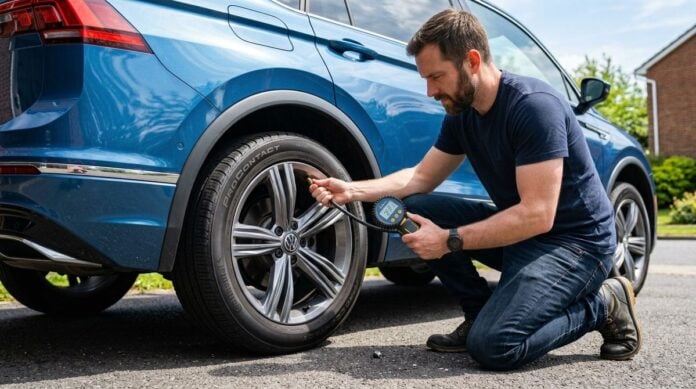

If you drive across a big city every day, your tyres work harder than most people realise. Each trip includes stop-start traffic, potholes, hot tarmac, and sudden braking on wet roads. Tyres that are even slightly under-inflated can wear unevenly, heat up more quickly, and respond less predictably when you need to brake. Checking pressure is one of the simplest maintenance tasks, and it takes only a few minutes once you know the routine.
Why pressure matters more on long journeys
Tyre pressure changes with temperature. Cold mornings lower the reading, while a long drive on warm roads raises it. A tyre that looked fine when you left home may be lower after a chilly night in an open car park, and a commute that includes motorway sections puts extra load on every tyre. Over many weeks, a small pressure gap can lead to faster wear on the outer edges, a rougher ride, and a higher fuel use.
Under-inflation is also a safety concern. A soft tyre flexes more than it should, which builds heat and can cause a sudden loss of grip in heavy traffic. Over-inflation can be just as harmful, because the contact patch shrinks and the car may bounce over bumps. The goal is the correct pressure for your vehicle, not the highest number printed on the tyre wall.
Finding the right pressure
The correct figure is usually listed on a sticker inside the driver’s door frame, in the fuel filler flap, or in the owner’s handbook. That number is for the vehicle, and it may differ for the front and rear axles, or for a full load of passengers. Do not use the maximum pressure printed on the tyre sidewall, since that figure is a safety limit rather than a recommendation for your car.
Check the pressure when the tyres are cold, ideally before you have driven more than a short distance. If you must check after driving, allow the tyres to cool for a while and add a little more air if needed, then recheck later. Use a reliable gauge, because the gauges at some petrol stations can be inaccurate or damaged. Readers may also want to visit Estate-link.net.
A simple monthly routine
A short, regular routine is more effective than an occasional check when you remember. Set a reminder for the first weekend of each month, and make the same steps every time so nothing is missed.
- Check all four tyres, plus the spare if your car has one.
- Use the pressure from the door sticker, not the sidewall maximum.
- Look for uneven wear, bulges, cuts, or objects stuck in the tread.
- Replace the valve cap on each wheel to keep dirt out of the valve.
- Write the date and reading in a notebook or on your phone.
Many drivers keep a small pump in the boot for emergencies. A cordless pump is useful, but test it at home before relying on it on a dark roadside.
Mistakes to avoid
The most common mistake is trusting the warning light alone. A tyre pressure monitoring light usually appears only when the pressure has dropped considerably, which may be too late to avoid stress or extra wear. Check manually at least monthly, even if the light has never appeared.
Another mistake is ignoring a slow leak. If one tyre needs air every week, look for a nail, a damaged valve, or a bead that is not sealing properly. A tyre specialist can inspect it and advise whether a repair is safe or whether the tyre should be replaced.
The third mistake is forgetting the tyre tread. Shallow tread reduces grip in rain, and it can lead to aquaplaning on flooded roads. Use a simple coin test or a tread depth gauge, and seek professional advice if the tread is close to the legal minimum for your region.
When to seek professional help
Tyres are a safety-critical part of any vehicle. If you notice repeated pressure loss, vibration at speed, or unusual noise, book a check with a qualified mechanic. You can also visit casonestateapartments.com for more reading.
For a related read on this site, see Touring a Rental Apartment With Everyday Comfort in. Before buying new tyres, ask a professional to confirm the correct size and type for your vehicle. Do not choose a size only because it looks similar or costs less. Good advice protects both your safety and your budget over the long term.
Checking tyre pressure is a small habit with a large effect on daily driving. Read the correct figure, check when the tyres are cold, record the results, and act quickly on any slow leak. A few minutes each month keeps the car safer, quieter, and more predictable on the road you travel every day.