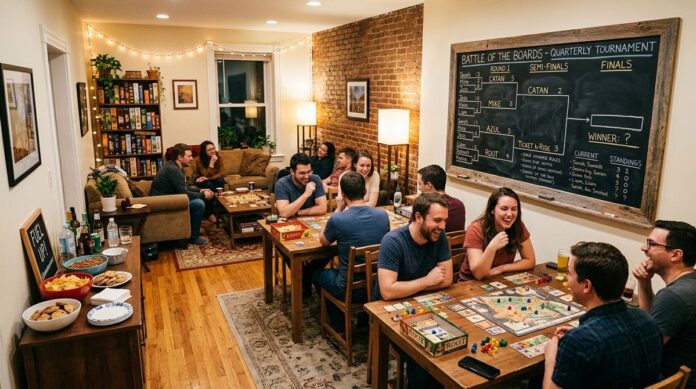

Most game nights fail in the same way. One player sits through a long setup, another starts checking a phone, and the box goes back on the shelf before anyone reaches the final round. The problem is rarely the game itself. It is usually the pace, the length, and the way the evening was planned from the start.
This article looks at how to choose and run board games so that a mixed group stays engaged from start to finish. It covers game length, teaching the rules, and handling the player who wants to quit halfway through. The advice applies to family tables, office lunches, and friends who meet once a month. None of it requires expensive equipment or a large room.
Matching the length to the crowd
A game that takes ninety minutes can feel fine to a group of seasoned players and exhausting to a table of newcomers. Short games with clear turns tend to hold attention better, especially when people are tired after a long day. Think about the least patient player in the room and plan around that person. The whole evening works better when the slowest moment is short.
Readers may also want to visit cbdjiaoyi.com. Reading through a few lists shows how many titles fit into a single evening. Pick two options so you have a backup if the first choice drags. Write both names on a card so the decision takes seconds at the table.
Teaching rules without a lecture
Long rule explanations are the fastest way to lose a table. Read only the first two turns aloud, then let people play and ask questions as they go. Keep a one-page reference card near the board so nobody has to flip through the whole rulebook. Most players learn faster by doing than by listening to someone describe every edge case.
You can also visit Fiber Gaming for more reading. A practice round lets players see how the turn order works without fear of making a costly mistake. It also gives the teacher a chance to correct misunderstandings early, before they grow. Keep the practice round brief so the momentum does not stall.
Keeping every seat involved
Quiet players often stop participating when a faster player takes over the decisions. Ask each person to make one choice on every turn, even if it is a small one. Rotate the role of reading cards or counting points so that everyone has a clear job. A visible job keeps people focused on the board rather than their phones.
Watch for the signs of boredom, such as long pauses or people reaching for snacks instead of pieces. When that happens, speed up the turn timer or suggest a shorter rule set. For a related read on this site, see Slow Travel Through Coastal Villages Without a Rental. Adjusting the game is often better than forcing everyone to finish a long session.
Handling the player who wants to quit
Some players want to leave halfway through, and the group can handle that gracefully. Offer a short break with snacks, then return to the table for a final round. Ending a game early by agreement is a reasonable choice when the energy has truly faded. A brief pause often gives a tired player the reset they needed.
Avoid making anyone feel scolded for wanting to stop. A quick thank you and a note about which game to try next time keeps the evening friendly. Players who leave with a good feeling are more likely to join the next gathering. Small courtesies like these matter more than the final score.
Ending the night on a high note
Finish with a short game that everyone can complete in about twenty minutes. A small celebration, such as passing the winner’s trophy around the table, helps the group close the evening together. Save the heavier titles for the next session when people are fresh. Ending on a light note leaves everyone wanting to return.
A short written list of favorites can help the next host plan. Note the games that kept people talking and the ones that dragged. Over time, that list becomes a reliable guide for any group that wants to keep coming back. Share the list with the group so everyone can suggest the next title.
Keeping the table friendly
The best game nights feel like a shared plan rather than a test of stamina. Short games, clear teaching, and quick adjustments keep most players engaged. When the pace matches the room, the box stays off the shelf and the table stays full. Good hosts notice the mood early and adjust before the evening slips away.