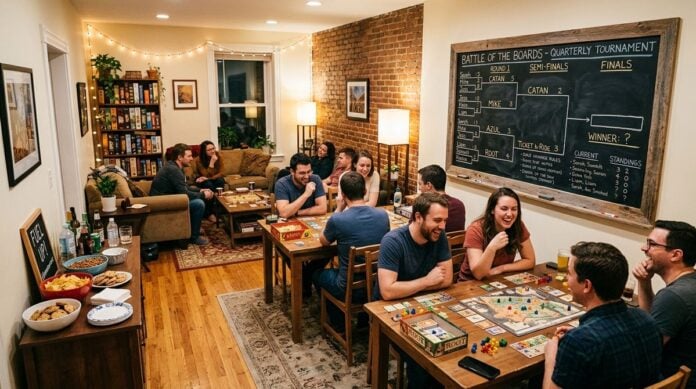

Puzzle and strategy games often reward slow, careful thinking. They can be wonderful after work because they let you settle down and focus on something small and satisfying. The right ambient music helps that focus without pulling your attention away from the board or the grid. This article explains how to choose calm background music for these genres, how to avoid distractions, and how to build a short list you can return to on busy nights.
Why ambient music suits thinking games
Thinking games benefit from background sound that is steady and predictable. When the music never surprises you, your mind can stay on the problem. Ambient pieces often use long notes, soft textures, and slow changes, which give the ear something to follow without demanding attention. This is different from action games, where energetic music can help you react quickly. Here, the goal is a quiet companion rather than a coach.
A quick way to explore this style is to look at collections curated for focus and rest. Readers may also want to visit columnews.com. Starting from a known selection can save a lot of scrolling when you are already tired.
Choose a steady pulse
Look for tracks with a pulse that you can barely notice, or with no pulse at all. A steady rhythm can help some players settle into a calm pace, but a strong beat may push you to rush. Test the track while you do a simple task, such as sorting clothes or stirring a pot. If your hands start to move faster, the music may be too energetic for careful planning.
Pay attention to sudden swells as well. A piece that builds dramatically can make you feel as though you should hurry, even when the puzzle itself has no time limit. Gentle, even motion is usually more supportive for long sessions of careful thought.
Keep the volume low and the layers few
Thinking games are often played for long periods, so the music should be easy to ignore. Keep the volume lower than you would for an action title. Choose pieces with only a few layers. A simple piano line over a soft pad is often enough. Too many instruments can compete with the small sounds that tell you a move has been made, such as clicks, chimes, or tile movements.
You can also visit turn-news.com for more reading. Reading these ideas can help you notice the cues you might otherwise miss, and it can make your listening more deliberate.
Build a short rotation for busy nights
On a tired weeknight, decision fatigue sets in quickly. A short rotation of a few trusted playlists saves you from scrolling through options. Keep the list small and label each playlist with the mood it supports. When the same tracks return, they become familiar in a comfortable way, and that familiarity can be part of the calm.
1. A slow opener for settling in
2. A focused mix for complex levels
3. A soft closer for winding down
For a related read on this site, see What to Gather Before Your First Tax Return. Their insights can make your selections more deliberate over time, and they may help you understand why a particular piece works so well behind a difficult puzzle.
It also helps to think about the relationship between music and time. A puzzle that takes a few minutes may need a different soundtrack from a strategy session that stretches across an evening. For short sessions, choose a piece that resolves quickly and leaves you in a calm state. For longer sessions, choose a set of tracks with variety that is still gentle, so the ear does not become bored. Keep an eye on how you feel when the session ends. If you feel rested and clear, the choice is working. If you feel restless, adjust the volume or swap the set. Good background music should leave you feeling capable and settled, not hurried or drained.
Finally, consider the setting. A quiet bedroom, a shared living room, and a kitchen table each carry different sounds from the rest of the house. Test your playlist in the place where you usually play, because the room can change how the music feels. Turning the volume down slightly is often enough to keep the focus where it belongs.
Ambient music for puzzle and strategy games is about support, not spectacle. Choose steady textures, keep the layers few, and build a small rotation that you trust. With the right sound in the background, a weeknight can become a calm, satisfying space for thinking clearly, and the game can take your full attention where it belongs.